Ethereum Tokens: What They Are, How They Work, and Their Real-World Use Cases
Disclaimer: This article is for informational and educational purposes only and simplifies underlying technical concepts for clarity. It is not financial, investment, legal, or security advice. References to companies and products are illustrative and are not endorsements.
What if a digital token could represent a dollar, facilitate a loan, provide exposure to a government bond, or give its holder voting rights in a blockchain application?
This is one of the fundamental capabilities of Ethereum. Beyond its native cryptocurrency, ETH, Ethereum supports thousands of other digital assets called tokens. These tokens can represent currencies, financial assets, loyalty points, digital collectibles, tickets, or rights within an application.
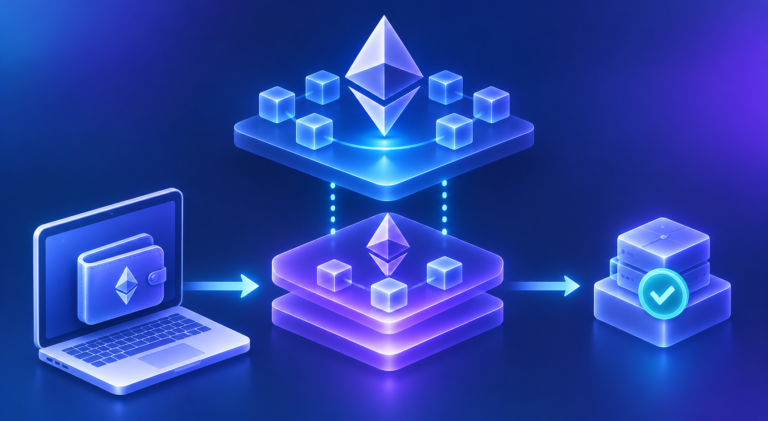
Tokens are made possible by smart contracts, which define how they are created, transferred, and managed. Because these contracts operate on Ethereum, tokens can interact with wallets, exchanges, lending protocols, and other compatible applications.
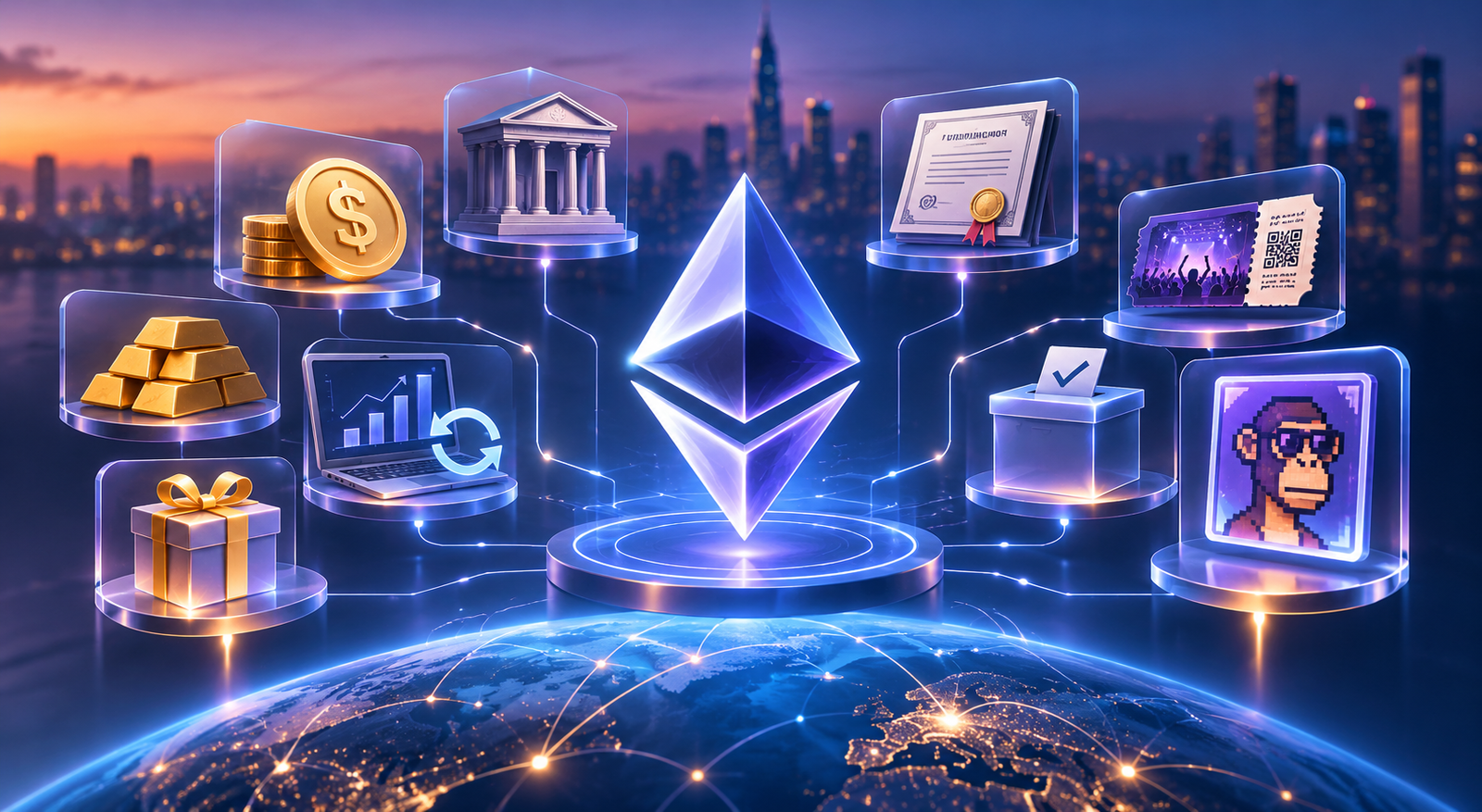
Today, Ethereum tokens support a broad range of activities, from transferring digital dollars to representing investment funds and facilitating financial services. They can also allow businesses to create new ways of distributing rewards, managing ownership, and raising capital.
To understand why tokens matter, we first need to understand what they are and how they work.
In This Article, You'll Learn
- ✓ What Ethereum tokens are, how they differ from ETH, and how they are created
- ✓ Where token balances actually live, and why standards such as ERC-20 matter
- ✓ Seven real-world use cases, from stablecoins and DeFi to tokenized funds, deposits, rewards, governance and NFTs
- ✓ What the 2017 ICO boom taught us about the power and risks of tokens
- ✓ Which companies are building the Ethereum token ecosystem, and the key risks to understand
1. What Are Tokens on Ethereum?
A token is a digital item created and tracked by a smart contract. The contract maintains records of token balances or ownership and defines the rules governing them.
Tokens can represent different things depending on how they are designed. A stablecoin may represent a claim under an issuer's terms designed to maintain a value of approximately one US dollar. A governance token may provide voting rights within a blockchain protocol. A non-fungible token may represent a unique digital collectible, event ticket, or membership.
ETH versus tokens
ETH is Ethereum's native cryptocurrency. It exists as part of Ethereum's own account and balance system and does not require a separate token contract to function as a currency.
Other tokens, such as USDC, LINK, and UNI, are generally managed through smart contracts deployed on Ethereum.
ETH serves several important purposes. It is used to pay transaction fees, participate in Ethereum's proof-of-stake consensus mechanism through staking, and transfer value between addresses.
Tokens serve purposes defined by their respective contracts. They can represent digital dollars, provide access to financial services, facilitate governance, or represent interests in other assets.
For example, USDC is a stablecoin issued by Circle, while UNI is a governance token associated with Uniswap. Both can exist on Ethereum, but they have different purposes and operate under different rules.
How are tokens created?
Tokens are typically created through smart contracts that define their rules and functionality. Consider a company that wants to create a token called ABC.
First, a developer deploys a smart contract on Ethereum. The contract defines how ABC tokens can be issued, transferred, and managed.
Next, the contract creates a specified quantity of tokens and records the corresponding balances. Depending on its design, it may also permit additional tokens to be created in the future, an action known as minting, or allow existing tokens to be destroyed, an action known as burning.
The contract may also impose restrictions. For example, it might restrict who can create new tokens or allow only verified investors to hold and transfer them.
Once the tokens exist, users can transfer them between compatible addresses, subject to the contract's rules.
2. Where Do Tokens Actually Exist?
Tokens are not separate digital objects stored inside a user's wallet. Instead, you can think of a token balance as an entry in a dataset maintained by the token's smart contract on Ethereum.
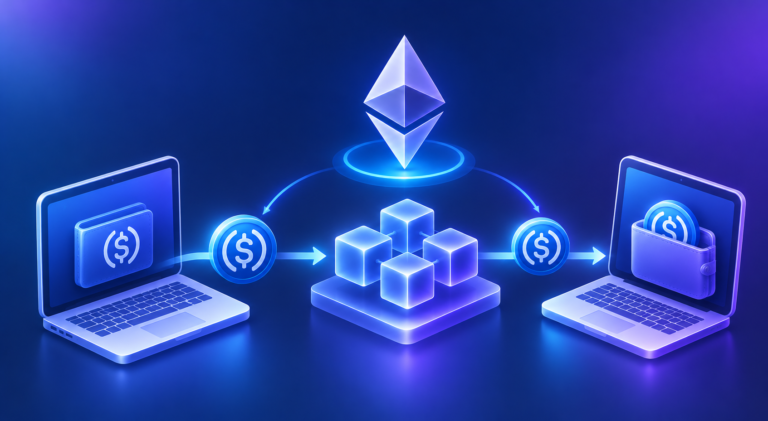
Suppose an investor owns 100 USDC on Ethereum. The USDC smart contract maintains the balance associated with the investor's Ethereum address. The investor's wallet reads this information and displays a balance of 100 USDC.
If the investor transfers 30 USDC to another address, the transaction calls the USDC contract. The contract checks whether the transfer is valid and updates the relevant balances.
After a successful transfer, the sender's balance becomes 70 USDC and the recipient's balance increases by 30 USDC, assuming there are no other changes.
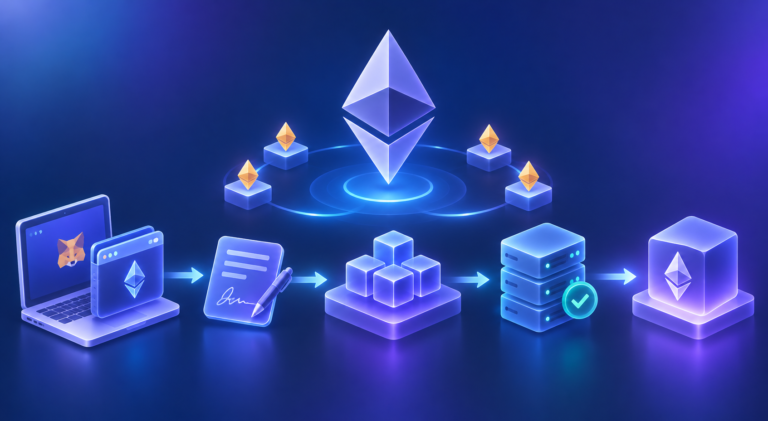
The transaction is processed by Ethereum nodes, which execute the contract's code and verify the resulting state according to Ethereum's rules. The updated balances become part of Ethereum's state once the transaction is included in the blockchain.
The wallet provides the interface through which the investor views and manages the tokens. The wallet uses cryptographic keys to authorize transactions, while the token contract maintains balances and defines the rules governing transfers.
3. Why Do Token Standards Matter?
Imagine a shipping container arriving at a port. Because shipping containers follow standard dimensions and have standard fittings, cranes, ships, trains, and trucks can handle them without needing a different system for every container.
Ethereum token standards work in a similar way.
In the early days of Ethereum, each token contract could implement its own methods for checking balances and transferring tokens. Wallets and exchanges then needed custom code to support each token, making integration more difficult.
The ERC-20 standard, proposed in 2015, introduced a common set of functions for fungible tokens. These include functions for checking balances, transferring tokens, and approving another address to spend tokens.
Later standards extended the same principle to other types of assets. ERC-721 is widely used for non-fungible tokens, while ERC-1155 supports both fungible and non-fungible token types within a common contract framework.
| Without common standards | With common standards |
|---|---|
| Each token may require custom integration | Compatible applications can use the same standard functions |
| Wallets need specific support for each token | Wallets can interact with compatible tokens consistently |
| Applications may need separate code for different tokens | Applications can reuse existing integration logic |
| Launching and integrating tokens can be more complicated | Creating and integrating tokens becomes easier |
Standards make tokens easier to use across wallets, exchanges, and applications. They also allow developers to build applications that interact with existing tokens rather than creating a new asset for every purpose.
4. Different Types of Ethereum Tokens
Tokens can be classified according to what they represent and how they behave.
| Token type | Purpose | Examples |
|---|---|---|
| Stablecoins | Maintain a relatively stable value against a currency or another asset | USDC, USDT, PYUSD |
| Loyalty and reward tokens | Represent points or rewards issued by a business | Starbucks Odyssey stamps |
| Governance tokens | Support voting and decision making within protocols | UNI, AAVE |
| Tokenized financial assets | Represent interests in financial products | BUIDL and eligible Ondo products |
| Tokenized commodities | Represent interests associated with assets such as gold | PAXG, XAUT |
| Non-fungible tokens | Represent distinct digital items or assets | Tickets, certificates, artwork and collectibles |
The main distinction is between fungible tokens and non-fungible tokens.
Fungible tokens are interchangeable units. One USDC is generally interchangeable with another USDC of the same type. The same principle applies to currencies and loyalty points when their terms give each unit the same value.
Non-fungible tokens, commonly called NFTs, represent distinct items. A ticket for seat 14C is not necessarily equivalent to a ticket for seat 2A. Each item has its own identity and may have different associated rights.
5. Use Case One: Stablecoins and Digital Payments
Stablecoins are tokens designed to maintain a relatively stable value, usually against the US dollar. They allow users to hold and transfer dollar-denominated value using blockchain infrastructure.
They are among the most widely used tokens because they combine the familiarity of traditional currency with the transfer capabilities of blockchain networks.
Associated companies
- Circle issues USDC, a dollar-linked stablecoin.
- Tether issues USDT, another widely used dollar-linked stablecoin.
- Paxos issues PayPal USD, known as PYUSD, for use in supported payment and digital asset environments.
How are stablecoins used?
Stablecoins can support international payments, remittances, digital dollar balances, cryptocurrency trading, and transactions within decentralized finance applications.
For example, a business may need to transfer dollar-denominated value to an overseas counterparty. If both parties can access compatible wallets and the relevant stablecoin, they may be able to transfer the tokens directly on a supported blockchain network.
This can reduce reliance on traditional payment intermediaries for the blockchain transfer itself, although the complete payment process may still involve banks, exchanges, compliance checks, conversion costs, and other services.
Stablecoins are also important to cryptocurrency markets. Investors can exchange ETH or other tokens for USDC or USDT without necessarily converting their holdings into traditional bank deposits. The tokens also provide liquidity for lending protocols and decentralized exchanges.
Stablecoins matter because they can support digital payments at any time, across geographic boundaries, subject to network fees, liquidity, regulatory requirements, and the issuer's arrangements.
Risks and regulation
A stablecoin is only as reliable as the reserves and redemption arrangements behind it. In March 2023, USDC briefly fell to around 88 cents after Circle disclosed that part of its reserves was held at Silicon Valley Bank, which had just failed. The price recovered once US authorities confirmed that the bank's depositors would be protected, but the episode showed that a stablecoin can temporarily lose its peg.
Regulators have since introduced dedicated rules. In the United States, the GENIUS Act, signed into law in July 2025, created a federal framework for payment stablecoins, including requirements to back tokens one for one with cash and short-term US government debt and to publish regular reports on reserves.
6. Use Case Two: Decentralized Finance
Decentralized finance, commonly called DeFi, uses smart contracts to provide financial services such as lending, borrowing, trading, and staking.
Tokens are fundamental to these services because they represent the assets users deposit, borrow, exchange, or use as collateral.
Aave: Lending and borrowing
Aave is a decentralized lending protocol. Users can deposit eligible crypto assets into lending pools and earn interest according to the protocol's rules and market conditions. Other users can borrow supported assets by providing eligible collateral.
For example, an investor may deposit ETH into Aave and borrow USDC against that collateral. The amount available to borrow depends on the protocol's collateral requirements, asset risk parameters, and other conditions.
The investor retains exposure to ETH while obtaining access to USDC. However, if the collateral value falls sufficiently, the position may become eligible for liquidation under the protocol's rules.
Uniswap: Token trading
Uniswap is a decentralized exchange protocol that allows users to exchange tokens through smart contracts. Rather than relying on a conventional centralized exchange to execute every trade, users can interact with liquidity pools maintained by smart contracts.
For example, an investor who has borrowed USDC from Aave may use Uniswap to exchange the USDC for another token. The swap executes according to the relevant pool's liquidity, pricing mechanism, and transaction conditions.
Lido: Making ETH usable in other applications
Lido allows users to deposit their ETH into its protocol, where the ETH is used to participate in Ethereum's staking process and help support the network. In return, users receive a token called stETH, which represents their deposited ETH and associated staking position. Users can earn staking rewards through this arrangement.
The advantage is that users receive stETH, which they can also use in compatible applications, such as certain lending protocols, rather than having their ETH tied up exclusively in staking.
However, stETH is not exactly the same as ETH. Its market price can differ from ETH, and it carries risks associated with the protocol, staking, and market liquidity.
Why composability matters
A particularly important feature of Ethereum is composability. It allows compatible smart contracts and applications to interact with one another. Consider this sequence:
An investor deposits eligible ETH into Aave. Aave allows the investor to borrow USDC against the collateral, subject to its risk parameters. An application then uses Uniswap to exchange the borrowed USDC for another token. The investor can subsequently use that token in another compatible application.
Depending on the applications and transaction design, several of these actions may be combined into a single Ethereum transaction from the user's perspective. The individual smart contracts still execute their respective operations, and the complete transaction must satisfy the conditions imposed by each relevant contract.
7. Use Case Three: Tokenized Real-World Assets
Tokenization allows financial assets or interests in physical assets to be represented as blockchain tokens. These assets may include investment funds, government securities, commodities, property, private credit, and shares.
The token is not necessarily the underlying asset itself. It may instead represent a share, beneficial interest, contractual claim, or other legally defined interest.
BlackRock and Securitize
BlackRock's BUIDL fund is an example of a tokenized investment fund. Launched on Ethereum in March 2024, the BlackRock USD Institutional Digital Liquidity Fund invests in short-term US government debt and cash. Each fund share is represented by a token. Securitize provides tokenization infrastructure associated with the fund.
BUIDL illustrates how a traditional investment product can use blockchain tokens to represent fund interests while retaining eligibility requirements and other product rules. The fund is restricted to approved institutional investors, and its transfer arrangements are designed to ensure that only eligible wallets can hold its tokens.
What changes when a fund is tokenized?
- Settlement at different times of the day. Traditional fund shares and bonds generally operate within established market and settlement arrangements. Tokenized interests can potentially move outside conventional market hours, subject to product restrictions and the relevant network.
- Rules built into the process. Smart contracts can enforce specified transfer restrictions and eligibility requirements. For example, a token contract can prevent an unverified wallet from receiving a restricted token.
- Integration with other applications. Because the fund interests are represented as tokens, compatible platforms may be able to interact with them, potentially including accepting them as collateral where the product terms permit it.
These capabilities can reduce some administrative friction, but they do not automatically eliminate intermediaries or guarantee liquidity.
Other assets being tokenized
- Gold: Tokens can represent interests in vaulted gold, potentially allowing investors to acquire smaller interests. Trust in the custodian, reserve verification, and redemption arrangements remain important.
- Property: Tokenization can make fractional investment possible, allowing investors to acquire smaller interests in a property or an investment structure holding it. Legal recognition of the token and responsibility for managing the property remain important considerations.
- Private credit and loans: Tokens can provide access to investment structures involving loans or credit assets. Investors must still assess borrower default risk, transparency, and the legal arrangements supporting the investment.
- Shares and other securities: Tokenization can support new transfer and settlement processes. The rights attached to the tokens and the applicable securities regulations depend on the product and jurisdiction.
Why are financial institutions exploring tokenization?
Tokenization can change how an asset is held, transferred, and combined with other applications without necessarily changing the underlying economic asset.
Potential benefits include smaller investment amounts, more efficient administration, programmable transfer restrictions, and integration with compatible blockchain applications.
However, the legal and operational arrangements are just as important as the technology. A tokenized property interest is meaningful only if the relevant legal structure recognizes the holder's rights. A tokenized fund must also maintain the obligations and protections promised to investors.
Regulated financial centers, including Abu Dhabi Global Market and Dubai's Virtual Assets Regulatory Authority, have developed frameworks relevant to different categories of digital assets and financial activities. The applicable framework depends on the product, activity, and entity involved.
Institutional adoption
J.P. Morgan Asset Management has also launched tokenized money market funds on public Ethereum. Its first, MONY, launched in December 2025. A second, JLTXX, followed in 2026 and provides eligible investors with tokenized fund interests associated with a portfolio investing in US Treasuries and overnight repurchase agreements backed by Treasuries or cash. JLTXX is designed in part to hold the reserves that stablecoin issuers must maintain under US rules, linking tokenized funds directly to the stablecoin market.
These examples demonstrate that tokenization is not limited to cryptocurrency-native businesses. Established financial institutions are also exploring how blockchain infrastructure can support investment products.
8. Use Case Four: Institutional Payments and Tokenized Bank Deposits
Banks can use blockchain tokens to represent deposit liabilities and facilitate transfers between eligible institutional clients. An important example is J.P. Morgan's Kinexys business and its JPM Coin initiative.
JPM Coin is designed to represent a tokenized bank deposit for eligible institutional clients. It differs from a typical stablecoin because it represents a bank deposit liability rather than a token issued under a stablecoin reserve and redemption structure. JPM Coin was first announced in 2019 and initially ran on J.P. Morgan's own permissioned blockchain. In November 2025, its USD deposit token, JPMD, launched on Base, a public layer 2 network built on Ethereum.
In October 2026, JPMD went live on Ethereum mainnet, allowing approved institutional clients to transfer it across Ethereum and Base at any time of day.
How can tokenized deposits be used?
Imagine two financial institutions need to settle a transaction involving tokenized securities. One institution needs to deliver the securities, while the other needs to deliver the corresponding cash.
Tokenized deposits can provide a way to transfer eligible institutional money through blockchain infrastructure. If the cash and securities systems are compatible, their transfers may be coordinated to improve settlement efficiency.
This is important because tokenized financial assets are more useful when the money used to purchase them can also move through compatible infrastructure.
| Tokenized deposit | Stablecoin | |
|---|---|---|
| What it represents | A liability of the relevant bank | A token governed by its issuer's reserve and redemption arrangements |
| Example | JPM Coin (JPMD) | USDC, USDT, PYUSD |
| Who can use it | Eligible institutional clients | Depends on the issuer and the platform |
Tokenized deposits and stablecoins should not be treated as identical. Institutional blockchain payments remain subject to eligibility requirements, regulatory obligations, and the operating rules of participating institutions.
9. Use Case Five: Loyalty and Reward Points
Businesses can issue loyalty points as tokens rather than maintaining them exclusively within their own databases.
Traditional reward points are often tied to a particular company's system. Customers may only be able to redeem them through that business or its selected partners, and partnerships can require complex integrations. Tokenized reward points offer another approach.
Customers could hold the points in their own wallets, transfer them to other users, or use them with participating businesses. Compatible applications could potentially recognize the points without each partner needing to build a completely separate technical connection.
Businesses could also issue NFTs representing membership tiers, achievements, or exclusive experiences.
However, greater flexibility is not always better. Transferable points may create opportunities for resale and wider use, but they can also introduce speculation, fraud, accounting complexity, and reduced control for the issuing business.
Starbucks Odyssey: A lesson in customer adoption
In December 2022, Starbucks launched Starbucks Odyssey in the United States as an extension of its rewards program.
Members completed activities, including interactive games and coffee-related experiences, to earn collectible NFTs called stamps. These stamps carried points that could unlock experiences such as virtual classes and visits to a Starbucks coffee farm.
Starbucks deliberately kept the blockchain technology in the background. Customers could participate without managing a crypto wallet themselves, and the stamps were issued on Polygon, a network connected to Ethereum, to help reduce transaction costs.
Despite early interest, Starbucks closed Odyssey in March 2024. Commonly cited explanations include limited mainstream demand, declining interest in NFTs following the 2021 boom, and the effort required to explain the concept to everyday customers.
The case offers several lessons for businesses considering tokenized rewards:
- Customers care about the benefit, not the technology. Better rewards and more useful experiences matter more than whether the points are represented by tokens.
- Complexity should be kept out of the customer journey. Wallet creation, transaction fees, and token management should not become obstacles to using a rewards program.
- Businesses need to consider how much freedom customers should have. Transferability can be attractive, but it can also create speculation, fraud, and accounting challenges.
- Timing matters. Even a promising idea can struggle when market sentiment is weak or customers do not understand why they need it.
10. Use Case Six: Governance Tokens
Some Ethereum tokens provide holders with voting rights over decisions affecting a blockchain protocol. These are known as governance tokens.
Uniswap and UNI
UNI is the governance token associated with Uniswap. Eligible holders can participate in decisions affecting the protocol according to its governance rules.
Aave and AAVE
AAVE is the governance token associated with the Aave protocol. Governance proposals can concern matters such as protocol parameters, risk settings, treasury decisions, and other changes within the governance framework.
How does token governance work?
A protocol may introduce a proposal to change a parameter, upgrade a contract, or allocate resources from a shared treasury. Eligible token holders can participate in the voting process according to the protocol's rules.
Voting power is often linked to token holdings or delegated voting arrangements. This means large holders may have greater influence, while some holders may not participate in voting at all.
Governance tokens provide a way to coordinate decisions in systems that do not rely exclusively on a single central operator. However, they have limitations. Large holders can dominate decisions, voter participation may be low, and the legal treatment of governance tokens varies by jurisdiction.
11. Use Case Seven: NFTs and Digital Ownership
Not all Ethereum tokens represent interchangeable units of value. Non-fungible tokens, or NFTs, represent distinct digital items or assets. Each NFT has its own identity within a contract and may contain or reference information about the item it represents.
NFTs became widely known through digital art and collectibles during the 2021 boom. Some sold for millions of dollars, while many subsequently lost substantial value. However, the underlying idea of a verifiable, transferable record of a unique item has applications beyond digital art.
What can NFTs represent?
| NFT use | What it can do |
|---|---|
| Tickets | Represent entry to a specific event or a particular seat. The token can be checked at the venue to help verify that the ticket is genuine. |
| Certificates | Represent a degree, training certificate, or product authenticity record. A verifier may be able to check the record without contacting the issuer directly, provided the relevant information and verification mechanism are available. |
| Memberships | Represent access to a club, community, or service. A compatible application or venue can check whether the holder meets the membership requirements. |
| Digital art and collectibles | Provide a verifiable record associated with a digital artwork or collectible. Artists may also arrange for royalties on resales, although royalty enforcement depends on the marketplace and technical arrangements. |
| Domain names | An Ethereum Name Service name, such as a name ending in .eth, can be represented through a token that supports ownership and transfer under the service's rules. |
| In-game items | Represent a character, skin, or piece of equipment. If the game and other applications support it, the holder may be able to transfer or trade the item outside the original game. |
What does owning an NFT actually mean?
Owning an NFT means owning the token recorded by the relevant contract. It does not automatically give the holder copyright in an artwork, legal title to a physical object, or unrestricted rights to use the item. Those rights depend on the terms set by the issuer or creator and the applicable law.
OpenSea and NFT marketplaces
OpenSea is a marketplace that allows users to discover and trade NFTs across supported blockchain networks. A marketplace can read the token's ownership information and facilitate a transaction, subject to the relevant network and marketplace rules.
The marketplace does not necessarily create the rights associated with every NFT it lists. Those rights depend on the underlying token, its issuer, and the terms governing the asset.
12. Case Study: Tokenized Ticketing
Ticketing is a practical example of how NFTs can address problems in an existing industry.
Traditional ticketing faces several challenges. Counterfeit tickets can cause customers to be denied entry. Scalpers and automated purchasing systems can buy tickets in bulk and resell them at inflated prices. Organizers can also lose visibility into who attends an event after tickets are resold. NFTs can offer an alternative way to represent and verify tickets.
How can tokenized tickets help?
- Counterfeit prevention: Each ticket can be represented by a unique NFT. At the entrance, a scanner can check the blockchain record to confirm that the ticket is genuine and that the person presenting it meets the ticketing system's requirements.
- Resale controls: The ticket contract can be designed to restrict transfers or support resale through approved marketplaces. Where the system permits it, resale prices can also be capped.
- Revenue from resales: The system may be designed to direct a portion of resale proceeds to the organizer or artist. However, royalties are not guaranteed across every marketplace or transfer method.
- Continuing customer relationships: Organizers can offer additional benefits to ticket holders, such as early access to future events.
- Digital souvenirs: After the event, the ticket can remain as a collectible or proof of attendance.
Companies such as GET Protocol, now part of the OPEN Ticketing Ecosystem, have used NFTs in event ticketing. POAP, or Proof of Attendance Protocol, issues digital badges that can provide a verifiable record of attendance at events, conferences, and meetups.
A worked example
Imagine a concert in Abu Dhabi. Tickets are sold through a familiar ticketing application, which creates a digital wallet for each buyer. Each ticket is represented by an NFT with rules allowing resale only up to 110 percent of the original price. The system is also designed to direct 5 percent of resale proceeds to the organizer.
At the venue, staff scan the ticket code and check the token record. After the concert, the ticket remains available as a digital souvenir, and holders may receive early access to the artist's next performance.
This example illustrates the possibilities of tokenized ticketing, although the rules would need to be implemented and enforced by the actual ticketing system.
There are also practical limitations. Price caps may encourage unofficial resale channels. The ticketing application must work quickly at the entrance, including when connectivity is poor. Customers also need a way to recover access if they lose their wallet or device.
13. The 2017 ICO Boom: The Power and Risks of Tokens
The 2017 initial coin offering boom demonstrated how token standards could make fundraising more accessible while also making it easier for fraudulent projects to reach investors.
An initial coin offering, or ICO, was a method through which a project raised funds by selling its own tokens directly to the public, often in exchange for ETH.
Ethereum had conducted its own crowdsale in 2014. By 2017, the ERC-20 standard made it much easier for projects to issue tokens that could be recognized by compatible wallets and exchanges.
A project could publish a website and a white paper describing its plans, deploy a token contract, and sell tokens to investors. Buyers often hoped that the tokens would increase in value when the project launched or when the tokens became available on exchanges.
Hundreds of projects raised billions of dollars collectively during 2017 and early 2018. Some individual sales raised tens of millions of dollars in a short period.
What made ICOs attractive?
- Global access to funding: Projects could reach investors across geographic boundaries without relying exclusively on traditional fundraising channels.
- Access for smaller investors: Individuals could participate in early-stage projects that might otherwise have been accessible mainly to venture capital firms or wealthy investors.
- New business models: Some projects used token sales to fund the development of blockchain-based services, and some went on to build widely used products.
What went wrong?
Many projects had no functioning product, weak teams, unrealistic plans, or no intention of delivering on their promises. Investors often lacked audited financial information, adequate disclosures, and effective remedies when projects failed. Prices could be driven more by marketing and speculation than by the actual usefulness of the token.
Regulators also began examining whether particular tokens should be treated as securities. In July 2017, the United States Securities and Exchange Commission stated that some tokens could qualify as securities, using The DAO as an example. Regulatory warnings and enforcement actions followed in several jurisdictions, and the ICO boom collapsed during 2018.
What happened after the ICO boom?
The original ICO model largely disappeared, but the underlying idea of using tokens to raise capital and distribute rights continued in more regulated forms, including security token offerings that follow applicable securities laws. Tokens are also distributed to users as part of particular projects and applications, rather than being sold purely as speculative investments.
14. The Companies Behind the Ethereum Token Ecosystem
Different organizations play different roles in the ecosystem. Some issue tokens, others build applications that use them, and some provide the infrastructure connecting traditional finance with blockchain systems.
| Company or organization | Product or token | Primary use case |
|---|---|---|
| Circle | USDC | Stablecoin payments and digital dollar balances |
| Tether | USDT and XAUT | Stablecoin transfers and tokenized gold |
| Paxos | PYUSD and PAXG | Stablecoins and tokenized gold |
| Aave | AAVE and lending protocol assets | Lending and borrowing |
| Uniswap | UNI and token exchange protocols | Decentralized trading and governance |
| Lido | stETH | Liquid staking |
| BlackRock | BUIDL | Tokenized investment fund |
| Securitize | Tokenization infrastructure | Issuance and administration of tokenized assets |
| Ondo Finance | Tokenized financial products | Exposure to traditional financial assets |
| J.P. Morgan | JPM Coin and tokenized fund initiatives | Institutional payments and tokenized investments |
| OpenSea | NFT marketplace | Trading digital collectibles and other NFTs |
| PayPal | PYUSD, issued by Paxos | Digital dollar payments and transfers |
| OPEN Ticketing Ecosystem | Ticketing infrastructure associated with GET Protocol | Tokenized event ticketing |
| POAP | Attendance badges | Verifiable records of event participation |
A token's issuer does not necessarily operate every application that uses it, and an application does not necessarily issue all the tokens with which it interacts.
For example, Circle issues USDC, while Aave and Uniswap can support USDC within their respective financial applications. Each organization performs a different role, even though their products can interact.
15. Why Do Companies Need Tokens?
The value of tokenization is not simply that it creates another cryptocurrency. Tokens allow companies and applications to represent assets, balances, and certain rights in a standardized digital format that smart contracts can process.
| Who | How they can use tokens |
|---|---|
| Payment company | Use stablecoins to transfer digital dollars |
| Bank | Represent eligible deposits as tokens |
| Asset manager | Issue tokenized fund interests |
| Lending protocol | Accept tokens as collateral |
| Retailer | Issue digital rewards |
| Event organizer | Represent tickets as NFTs |
These use cases can share Ethereum's underlying infrastructure, provided the relevant contracts and networks are compatible.
The same token can potentially be used across several compatible applications, allowing it to serve more than one purpose without requiring every application to create its own separate representation of the asset.
This is why tokens are important to decentralized applications. They provide a common format for representing value and ownership, allowing applications to interact with assets that already exist within the ecosystem.
16. Key Risks to Understand
The use cases above share a common set of risks. Understanding them is as important as understanding the benefits.
- Smart contract risk: A flaw in a token or application contract can lead to lost or stolen funds, and blockchain transactions generally cannot be reversed.
- Issuer and custodian risk: Stablecoins, tokenized funds, and tokenized gold depend on the organizations holding the reserves or underlying assets. If those arrangements fail, the token can lose value regardless of how well the technology works.
- Key management: Whoever controls a wallet's private keys controls its tokens. A lost key or compromised device can mean permanent loss unless a custodian or recovery arrangement is in place.
- Liquidity and price risk: A token may be difficult to sell at a fair price, and tokens such as stETH or governance tokens can trade well below expected values when markets are under stress.
- Regulatory risk: Rules for tokens are still developing and differ between jurisdictions, so a product's availability or legal treatment can change.
17. Conclusion
Ethereum tokens extend blockchain technology beyond the transfer of a native cryptocurrency.
They enable digital dollars to move between wallets, provide assets for decentralized lending and trading, represent interests in investment products, support institutional payment arrangements, facilitate protocol governance, distribute customer rewards, and record ownership of unique digital assets.
The underlying relationship is straightforward:
Ethereum provides the blockchain infrastructure. ETH is its native cryptocurrency, used for gas and staking. Smart contracts define the rules governing tokens. Tokens represent the assets, balances, or rights managed through those contracts.
Shared standards make tokens easier for wallets and applications to recognize and use. This allows different services to interact with the same assets, creating opportunities for new financial products and business models.
At the same time, the technology cannot guarantee the truth of an issuer's promises, the legal recognition of an asset, or the economic value of a token. The ICO boom, the challenges of tokenized rewards, and the legal considerations surrounding tokenized assets all demonstrate why those distinctions matter.
Key Takeaways
- A token is a digital item created and tracked by a smart contract; ETH is Ethereum's native currency and pays the network's fees.
- Token balances live in the token's contract, not inside a wallet. The wallet holds the keys that authorize transfers.
- Standards such as ERC-20, ERC-721 and ERC-1155 let wallets and apps support many tokens the same way, which made launching tokens easy, for good projects and bad ones alike.
- Real-world uses include stablecoins, DeFi lending and trading, tokenized funds such as BUIDL, MONY and JLTXX, tokenized bank deposits such as JPMD, loyalty points, governance and NFTs.
- A token does not automatically carry economic value or legal rights. Those depend on its issuer, its terms and the applicable law.
- Key risks include smart contract flaws, issuer and custodian failure, lost keys, liquidity stress and changing regulation.